
REBUILDING SOUTH AFRICA'S PARLIAMENT:
The Peoples's Project

Timeline

Home > Timeline

Rebuilding South Africa’s Parliament: The People’s Project

2 January 2022

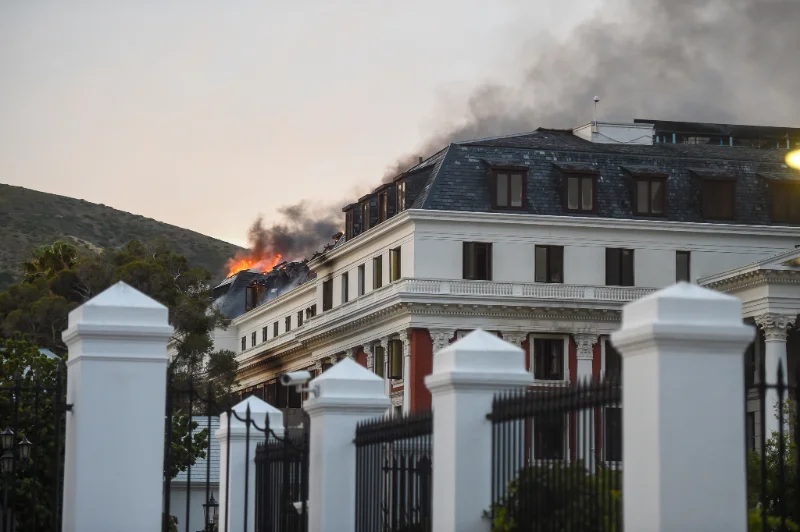
A fire broke out

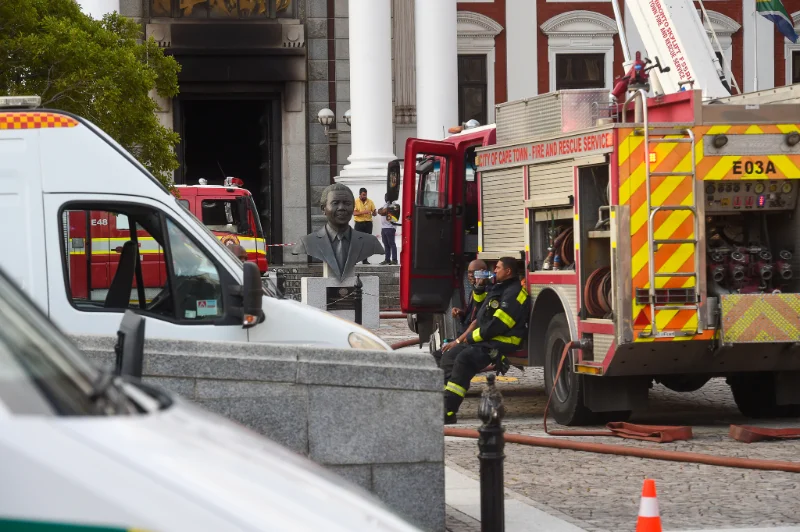
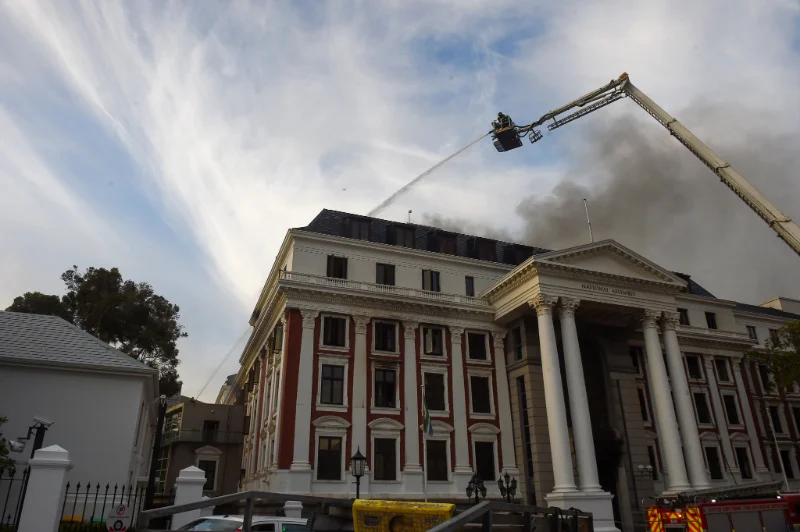
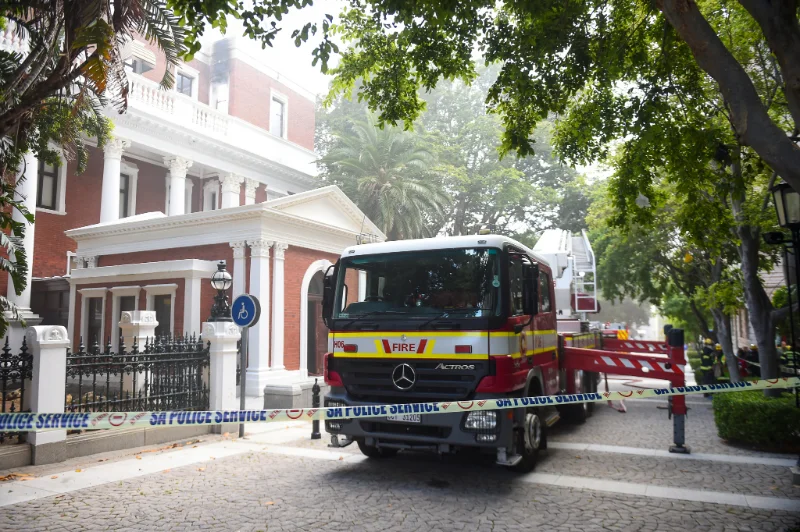
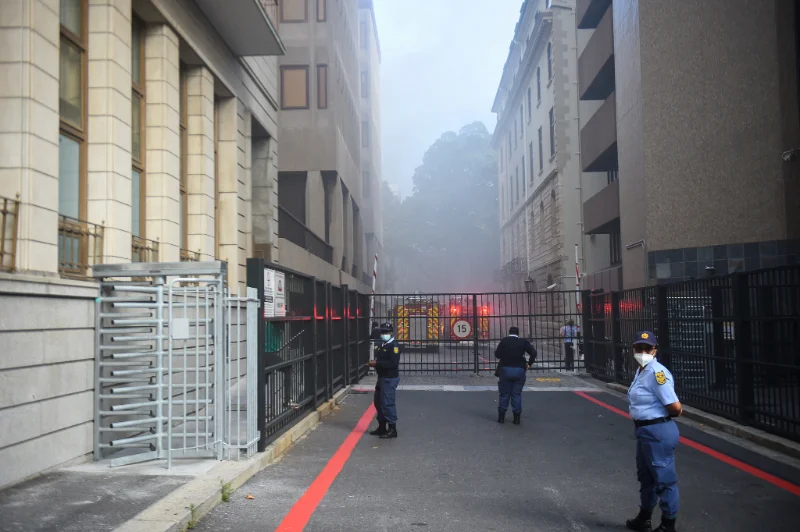
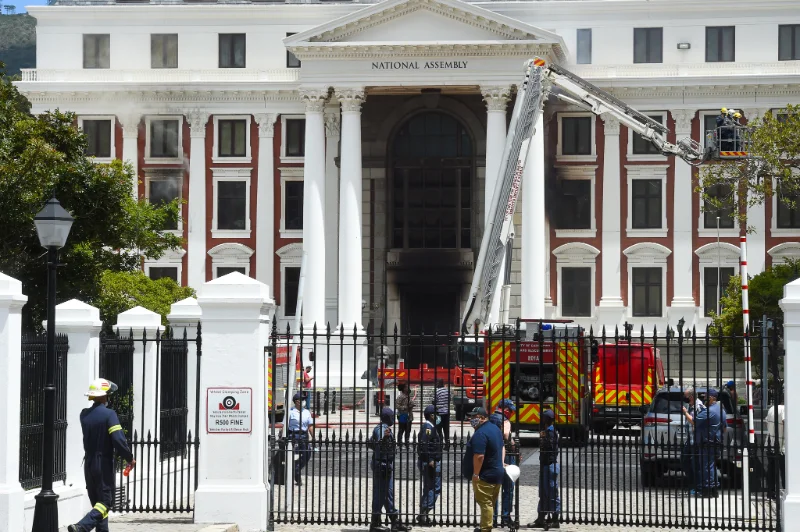
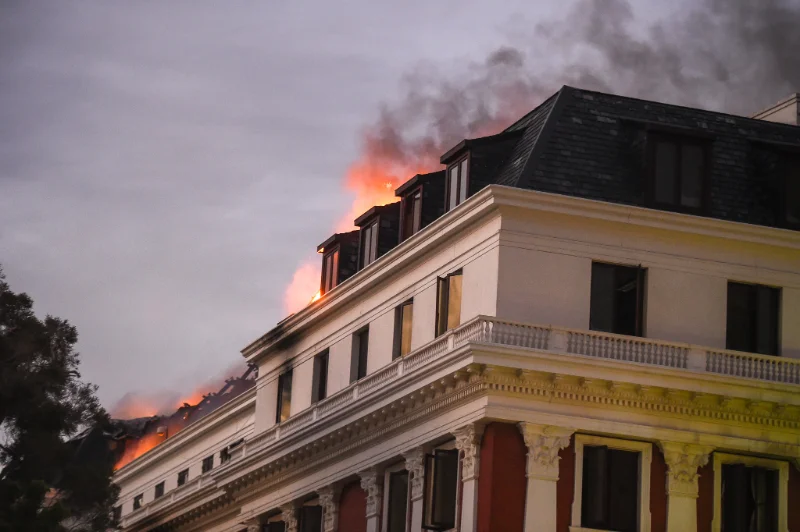
The fire broke out on 2 January 2022 and burnt for at least three days. The firefighters responded within six minutes after being called and alerted by the police guarding the parliamentary precinct.
The firefighters worked tirelessly for over 70 hours to contain the fire. Over 300 men and women were deployed. The firefighters used 60 firefighting appliances and used two specialised aerial pieces of equipment during the three-day battle against the blaze. At the time, the South African Police Service was guarding the precinct, as it is a national key point. The police were on duty on the day of the fire. They noticed the fire and called the City of Cape Town Fire Fighting and Rescue Services.
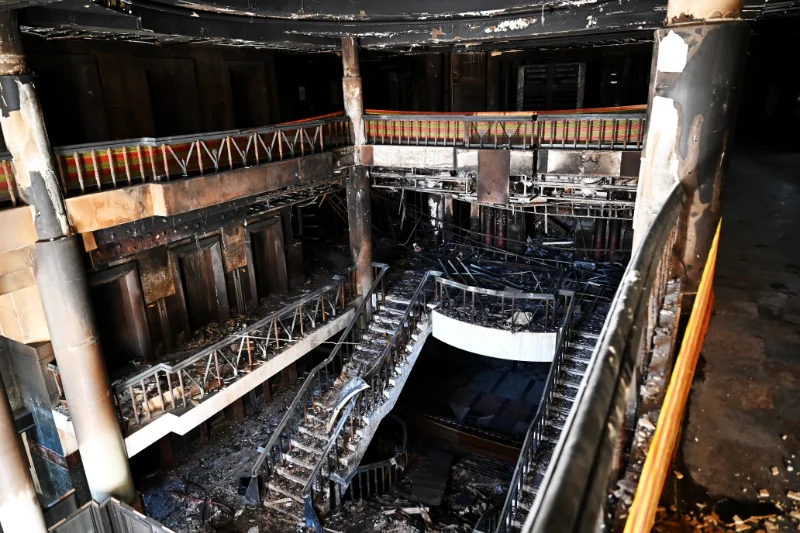
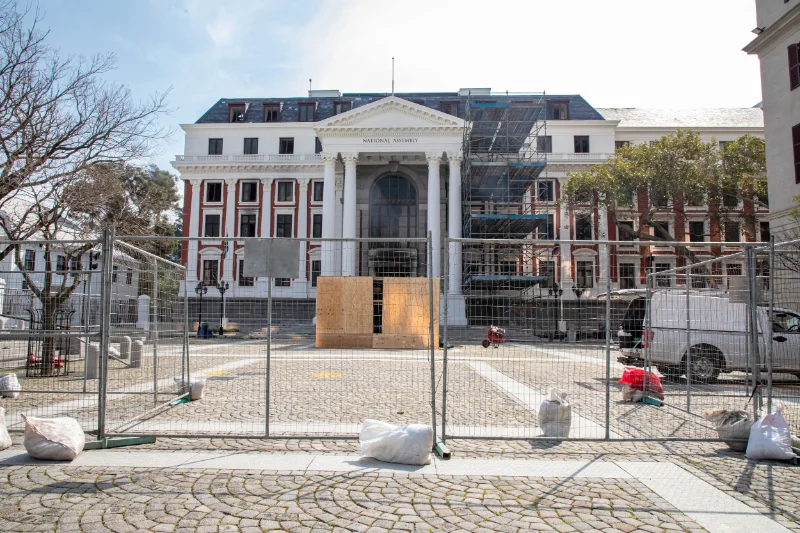
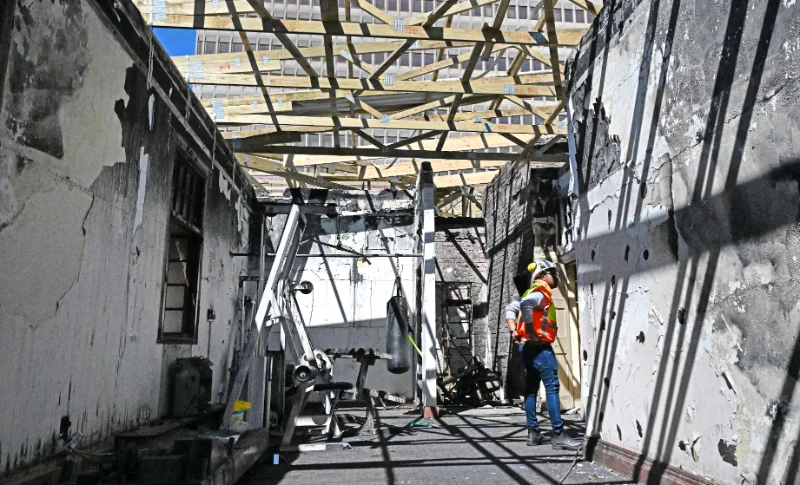
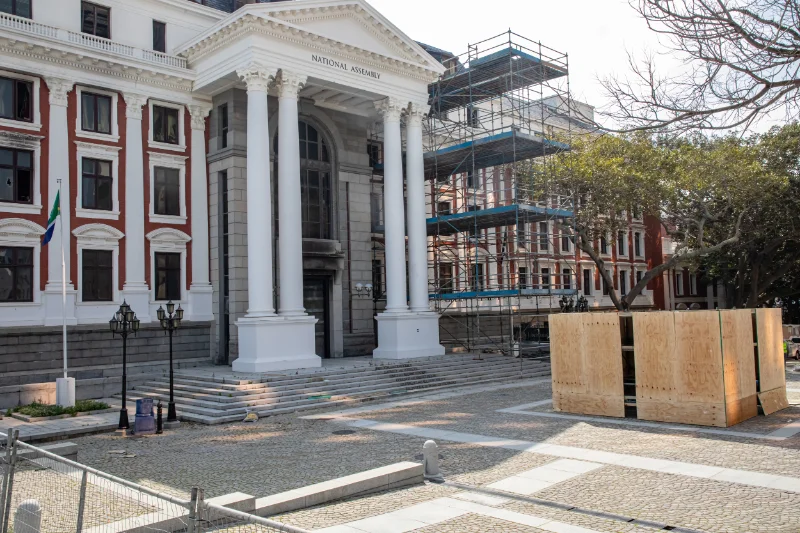
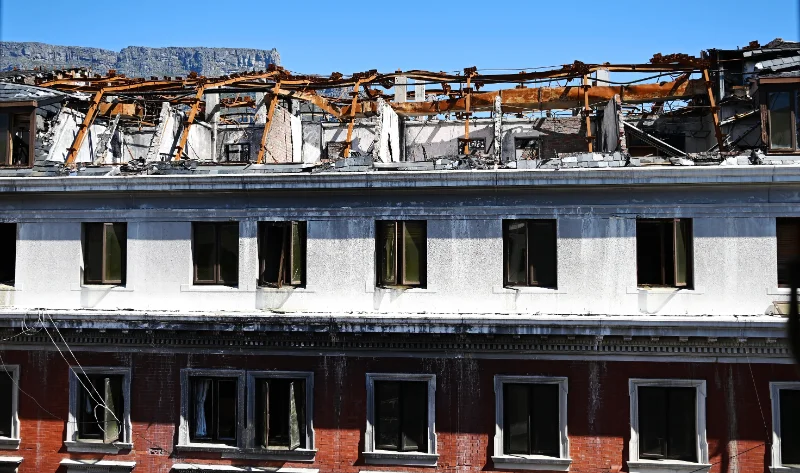
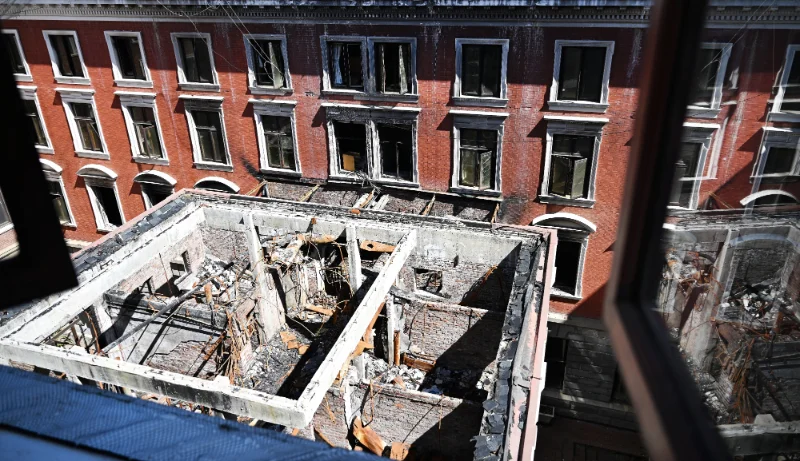
For almost three days, the fire tore through the 5 floors of the Assembly building and the adjacent Old Assembly Wing, collapsing the roof and destroying hundreds of offices which housed Members of Parliament and staff and their contents.

5 January 2022

Fire contained

6 January 2022

Standard Procedures

Presiding Officers of Parliament received fire report from City of Cape Town received outlining preliminary observations of the firefighters during their work, which is a standard procedure when dealing with incidents of this nature.

31 January 2022

Official Handover

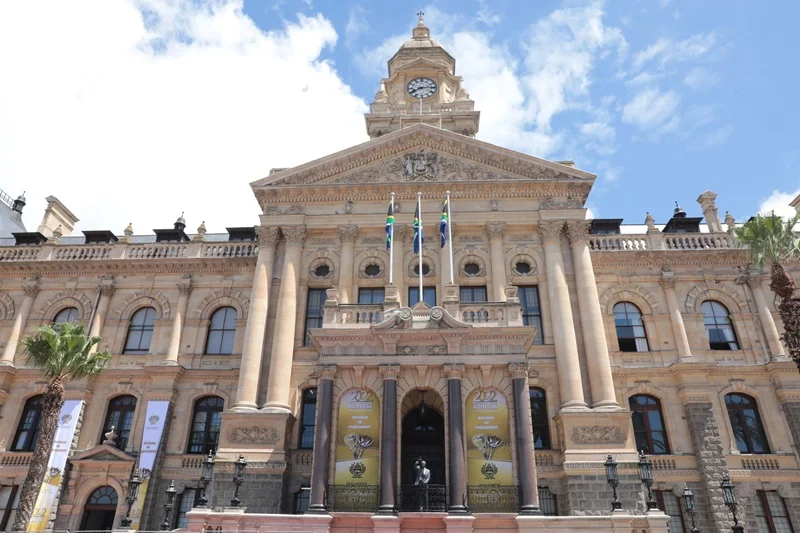
Official handover of City Hall to Parliament’s Presiding Officers, the Speaker of the National Assembly, Ms Nosiviwe Mapisa-Nqakula, and the Chairperson of the National Council of Provinces, Mr Amos Masondo. The hand-over followed a decision by the Presiding Officers to use the City Hall as an alternative off-site venue for hosting the State of the Nation Address. City Hall was declared part of the Parliament of South Africa precinct while restoration continues.

11 February 2022

Assessing the situation

The Coega Development Corporation was appointed by DPWI to conduct an independent assessment of the fire damage at Parliament. This followed the DPWI Engineering Services’ recommendation that specialised structural engineering assessment work must be undertaken for the buildings to be made safe for access. The scope of work was generated from the DPWI’s Engineering Services team for this work.

14 February 2022

Inspecting the damage done

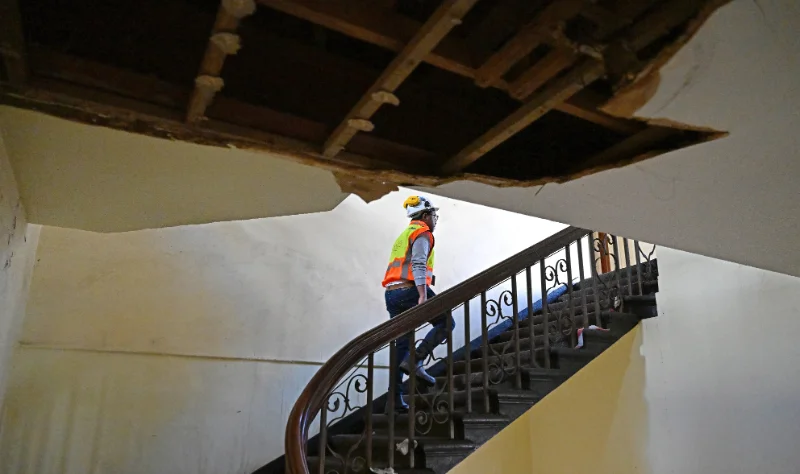
Coega started Phase 1 of its assessment (the structural assessment) on 14 February 2022 and submitted a draft report on 23 February 2022, and later the Final Report was submitted on 14 April 2022. Among the preliminary findings were that the National Assembly Building’s basement floors are flooded, and more inspection work needs to be done in this area. The assessment confirmed that the fire in the National Assembly building caused significant damage to the central structural elements from the second floor up to the sixth floor, but the structural integrity was such that the structure was not vulnerable to collapse.
It then took about seven months for Coega’s team to complete their final assessment, which included a quantification of damage and costs.

16 February 2022

Averting any potential flare ups

Structural engineers from the Department of Public Works and Infrastructure, who conducted inspections inside the fire-damaged National Assembly Building, picked up some heat at certain spots on the basement of the building and swiftly called the Cape Town Fire and Rescue Service Department as a precautionary safety measure to avert any potential flare up.

22 February 2022

Completed the bulk of the preliminary assessment

The Coega team completed the bulk of the preliminary assessment and reported on the fire damage to the National Assembly Building and the Old Assembly Building.

24 February 2022

Coega inducted the Hawks and fire forensic team

Coega inducted the Hawks and fire forensic team on health and safety and other hazardous aspects before entering the National Assembly.

25 February 2022

On-site meeting

On 25 February 2022, an on-site meeting was held with the Fire Department, City of Cape Town officials from various departments, DPWI, and the Facilities Management service provider to resolve basement water extraction into municipal sewers due to a high volume of water.

5 March 2022

COEGA issued official correspondence to DPWI

COEGA issued official correspondence to DPWI confirming Hawks and other investigators may access the National Assembly from 7 March 2022.

15 March 2022

Hawks investigation started

The Hawks investigation started.

19 March 2022

Permit for water pumping issued

The City of Cape Town issued the permit for water pumping into the sewer system to DPWI with specific conditions that must be complied with.

26 March 2022

Various meetings were held to ensure compliance

Various meetings were held to ensure compliance with the conditions stipulated on the permit. The Term Contractor was on-site to conduct an assessment, including measuring the pumping that commenced on 29 March 2022.

29 March 2022

Water pumping began

Pumping water into the sewerage system began.

1 April 2022

Structural damage does not pose a risk of collapse

The DPWI updated Parliament’s Joint Standing Committee on the Financial Management of Parliament on the progress with the independent assessment of the Parliament fire damage. It was found that current structural damage does not pose a risk of the collapse of the buildings. However, there was severe structural damage to the central structure of National Assembly floors two to six. Urgent work was required to make parts of the Old Assembly safe to exterior walls and to provide a temporary roof to prevent rain from causing damage to lower floors.

11 April 2022

Assessment phase 2

Coega started Phase 2 of its assessment.

12 May 2022

Presentation of preliminary findings

The Coega team presented preliminary findings to the DPWI. This was followed by a draft report submitted to the Minister of Public Works on 20 May 2022.

23 September 2022

Final assessment report

The final assessment report findings were presented to the Joint Committee on The Management of Parliament on 23 September. The report indicated the extent of damage, pronounced on the residual strength of the structure, including all relevant tests and analysis, proposed restorative measures with associated cost comparisons, proposed estimates of the rehabilitation project, and the preliminary cost for this. The report also had a pronouncement on possible long term restorative measures.

2023

Laying the groundwork for the reconstruction

A significant portion of the first year was dedicated to damage assessment by agencies appointed by the Department of Public Works and Infrastructure, a process that spanned most of 2022. Concurrently, Parliament secured over R2 billion for reconstruction of the damaged buildings and R118 million for unforeseen expenditures due to the fire and COVID-19, in collaboration with the National Treasury.
Last year (2022) marking the first year of the fire, the Presiding Officers of Parliament emphasised the urgency of restoring Parliament. Following a meticulously designed rebuilding blueprint, 2023 was dedicated to laying the groundwork for the reconstruction.
Early in 2023, Parliament and the Development Bank of South Africa (DBSA) formed a partnership for the rebuilding project. The agreement encompassed capacity development, technical support, and implementation of infrastructure projects. This involved refurbishing the Old Assembly and National Assembly buildings and the link building, clearing rubble for detailed assessments, and remodelling 155 offices in the 90 Plein Street building to accommodate MPs’ physical return to the precincts.

February 2023

SONA held in City Hall for 2nd year

SONA held in City Hall for 2nd year.

22 March 2023

Work completed on safe access routes

Work completed on safe access routes. The report was used for tender specifications for asset verification. This work enabled the physical asset verification and testing of samples by the Auditor-General. It also helped with scoping and documentation for rubble removal.

The project was handed over to Parliament by the Department of Public Works and Infrastructure in March.

16 May 2023

Asset verification completed

The asset verification that started on 2 May work was completed.

29 May 2023

Asset verification report submitted

Report on asset verification was submitted.

9 June 2023

3-D scanning completed

The work on 3-D scanning was completed. This meant the professional teams working on repairs and upgrades of the Old Assembly and the New Wing had a cloud-based blueprint to work from and a platform to share data in real time. The 3-D models also enabled easy engagement with stakeholders.

17 July 2023

Site preparation completed

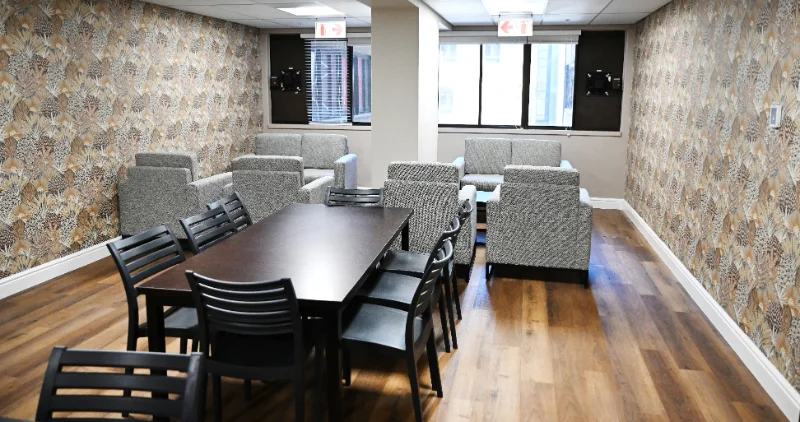
Work started on reconfiguring the 4th and 5th floors in 90 Plein Street into 155 offices for Members of Parliament, including two meeting rooms, three pause areas with kitchenettes, two reception areas, three storerooms, and 20 interpretation booths and two sign language studios.
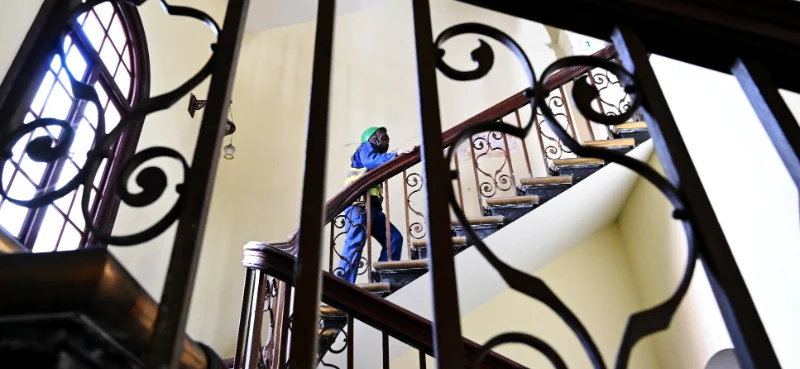
Concurrent with office remodelling, Parliament completed site preparation for reconstruction, including rubble and debris removal, as well as asset verification and removal from damaged buildings to prime the site for construction.

23 August 2023

Rubble removal started

Rubble removal started after a delay due to security clearance. The work included:
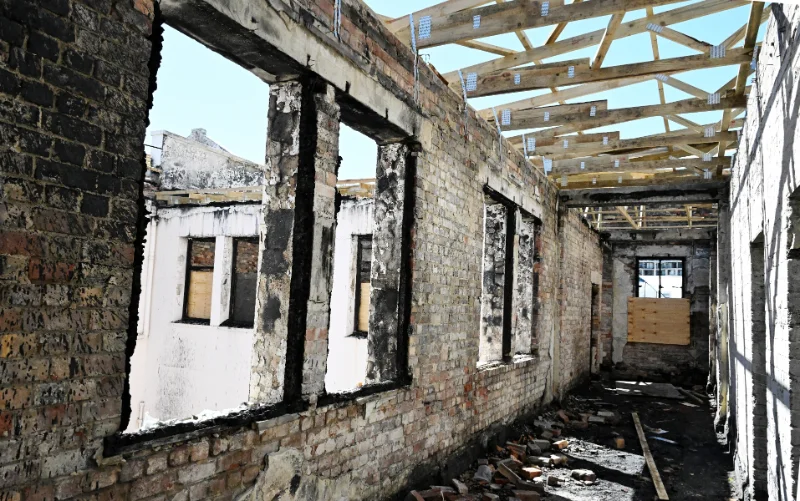
  • 750 cubic metre of rubble and debris were removed
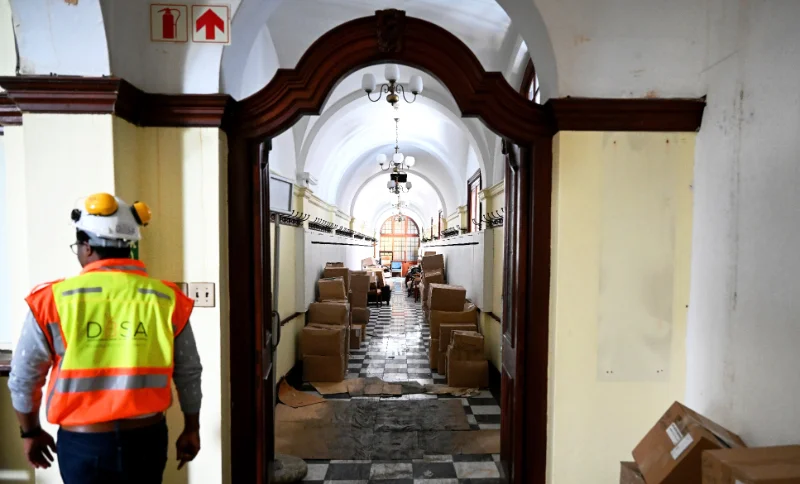
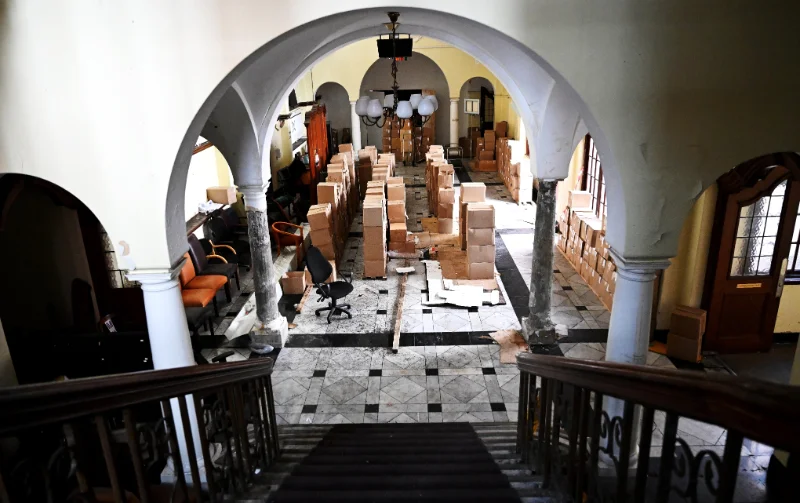
  • Furniture was moved to an off-site storage facility
  • Some items were disposed of as per asset management guidance
  • A temporary roof was installed at the Old Assembly.
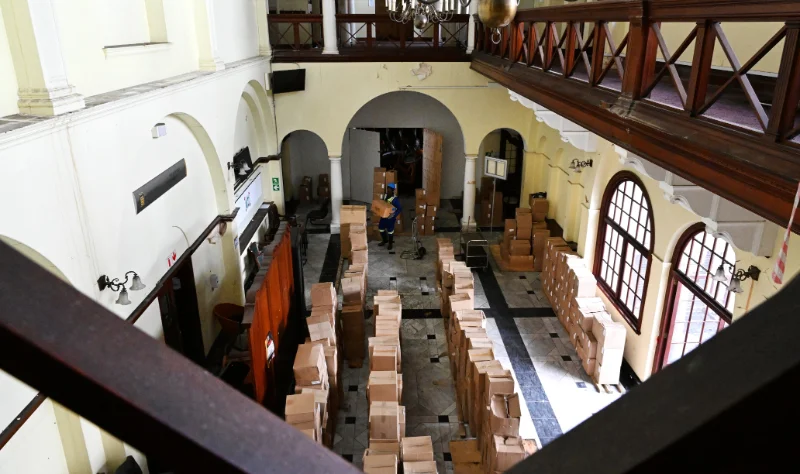
  • 220 Pallets of mold-infested books with heritage value were carefully removed and stored off-site.

6 September 2023

Reconfiguration of 4th and 5th floor of 90 Plein Street completed

Reconfiguration of 4th and 5th floor of 90 Plein Street completed with a budget of R66 913 792 for building work and the HVAC (air-conditioning and filtering) system, as well as R10 709 276 budgeted for furniture.

20 October 2023

Reviewing allegations of misconduct

Following legal counsel and reviewing allegations of misconduct among Parliamentary staff members, Parliament instituted action against implicated staff members. 28 employees received notice of the charges under consideration and were given a chance to reply or comment on the claims. Out of these, 26 employees have responded. One did not, while another was hospitalised at the time but has since indicated a willingness to address the allegations.
Some employees offered satisfactory justifications for their actions, which Parliament has acknowledged, absolving them from the charges. For these individuals, Parliament is contemplating alternative measures such as professional development or additional training to address any identified skill gaps.

Others failed to provide adequate explanations. Consequently, Parliament is arranging disciplinary hearings for these staff members, who will receive notice of the specific charges they face.

Due to the serious nature of the allegations, 9 out of the 13 staff members facing disciplinary action have been placed on precautionary suspension with full pay and benefits.

23 October 2023

Internal investigation findings released

Parliament released findings of its internal investigation into causes of the fire of January 2022. Among the findings were that the fire incident could have been prevented, or its extent limited, if certain critical measures had been in place. Among these was the decision not to deploy Parliamentary Protection Services officers at night and on public holidays and weekends during the 2021/2022 compulsory leave period, which left Parliament vulnerable. The findings also showed several systems and maintenance failures that contributed to both the security breach and the failure to prevent and contain the fire.

Also in October, Total facilities management (TFM) work started. Three TFM specialists were engaged on a full-time basis to accelerate activities.

14 november 2023

Removal of rubble, debris and heritage assets

Rubble and debris removal as well as removal of heritage assets completed. Completion date was delayed due to rain and the movement of books and more heritage assets. Among these assets were the marble busts at the National Assembly’s lower basement that had to be removed. They required special handling and transportation. All sections and storerooms at the lower basement were cleared, which resulted in lowering the risk of toxins from mold and foul gasses. This created space for structural work on the foundations for the planned construction work. An amount of R13 110 498 was budgeted of which 10% was for contingencies. By 15 December R6 081 853 had been spend on this phase.
Also in November, a gateway review process for the design concepts was concluded. The key output was finalising the permit approval process through the South African Heritage Resources Agency (SAHRA), which also involved multiple stakeholders. Beyond the statutory approvals, the committee responsible for oversight will approve the budgets.

11 December 2023

The man accused of starting the fire

Judge Nathan Erasmus found Zandile Mafe, the man accused of starting the fire at Parliament in 2022, not fit to stand trial.

18 December 2023

Total Facilities Management team first draft

Total Facilities Management team submitted a first draft of the report. The expected deliverables are:

  • To assist Parliament in formulating a facility management policy
  • putting together a facilities management strategy
  • outlining best in class benchmark for facilities management; and 
  • conducting a high-level condition assessment of assets. 

This work must inform a facilities management framework. 

February 2024

Project team put together a programme with designs

The project team had to put together a programme with designs scheduled to be completed by February 2024 to allow the pre-qualified contractors to price their bids.

March 2024

Updates and Benchmarking

Secretary to Parliament and project manager update the Joint Committee on the Financial Management of Parliament on the progress of the project.

A high-level parliamentary delegation undertook a benchmarking exercise at the Angolan Parliament following the successful completion of the construction of that country’s new parliament buildings

July 2024

Demolition

Demolition and rubble removal are expected to be finished thereafter the construction process is set to start.

August 2024

Construction Start

Construction is expected to start, and completion is expected by February 2026.

2025

Ongoing

Construction ongoing

February 2026

Completion

Construction expected to be completed.
[bold_timeline_item_button title=”Expand” style=”” shape=”” color=”” size=”inline” url=”#” el_class=”bold_timeline_group_button”]