
REBUILDING SOUTH AFRICA'S PARLIAMENT:
The Peoples's Project

Historical Context

Home > Historical Context

Historical Significance of the Parliamentary Buildings:

The fire that gutted the Parliamentary buildings on 2 January 2022 did not only destroy the brick and cement structures in the precinct but also the recently upgraded broadcast technology and the artworks displaying our Indigenous knowledge systems and traditional arts.

The destroyed artworks and the building structures trace a considerable chunk of our historical footprint, displaying who we were and are as a nation.
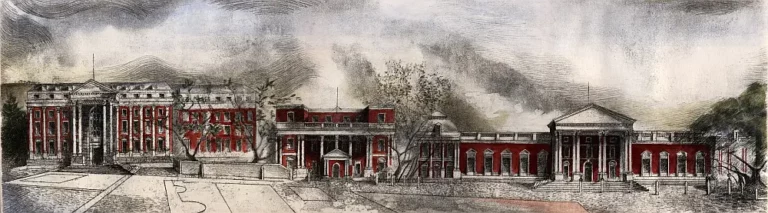
Image by Lyn Smuts The Houses of Parliament. Artist's proof hand-coloured etching of the Houses of Parliament viewed from Parliament Street, showing the 1885 (NCOP), 1910 (Old Assembly) and 1985 (National Assembly) buildings. Faint outline of Table Mountain behind. Artistic license with perspective.


According to the South African Heritage Resources Centre (SAHRC), the idea of a South African parliamentary precinct started in 1872 when it was decided to create a single Parliamentary Building to locate both Houses of Parliament in one building.

The Parliament of the Republic of South Africa and the Parliamentary Precinct, which includes Erf 95165; Erf 95164; Stal Plein Erf 3741; Erf 9557; Erf 3789; Erf 3790; Erf 3794, and Erf 3798 have been identified as a heritage resource with qualities so exceptional that it is of special national significance. Section 3(3) of the National Heritage Resources Act, 1999 (Act 25 of 1999) outlines criteria for determining the significance of a site or object to be included as part of the national estate. These include historical value, aesthetic value, scientific value, social value and rarity.
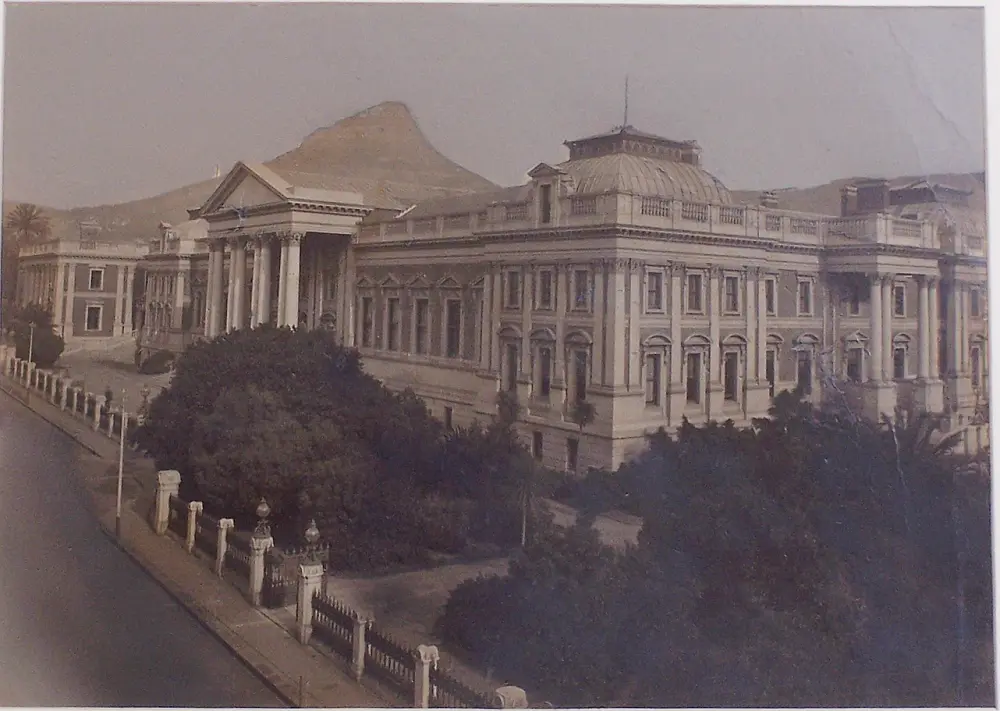
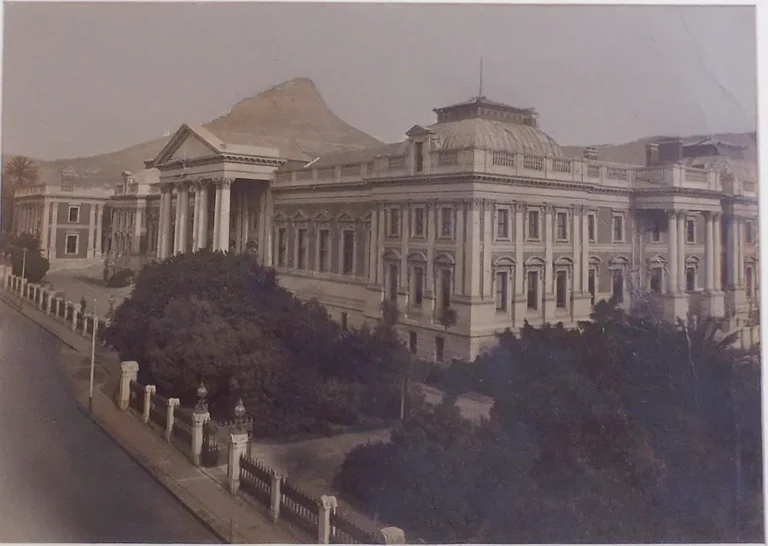
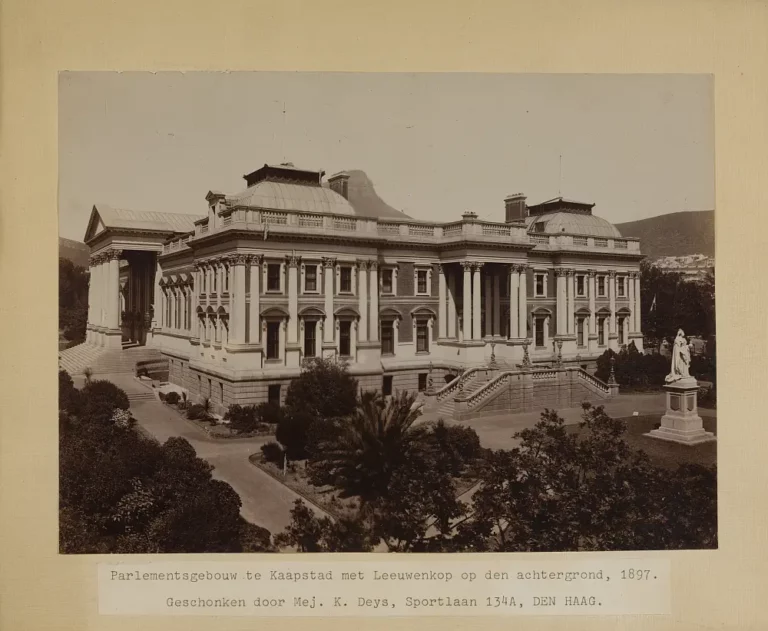
Image by Taylors Studios Ltd, Cape Town Black and white photograph of exterior of the Houses of Parliament, Cape Town. Shows original building (1885) and Old Assembly building (1910), with Lion's Head in background.


The buildings in the precinct of Parliament house the Members of Parliament (MPs) – as the key people in the institution – and cater for a range of administrative staff who support MPs as they execute their work. Parliament comprises about 1 500 administrative staff to provide various support services to MPs. This includes legal services, research, secretarial, communications, security, organising, logistical, catering, messengers, and cleaning services, among others.

The parliamentary precinct has several building, which include the National Council of Provinces (NCOP) Building, the National Assembly Wing, the Old Assembly Building, the Good Hope Building, the Marks Building, Africa House, Tuynhuys, 90 Plein Building, 100 Plein Building, and the 120 Plein Building that also houses the entrance of the visitor’s centre.

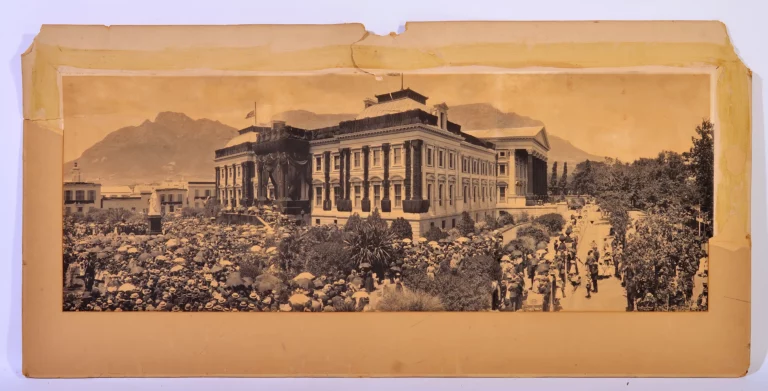
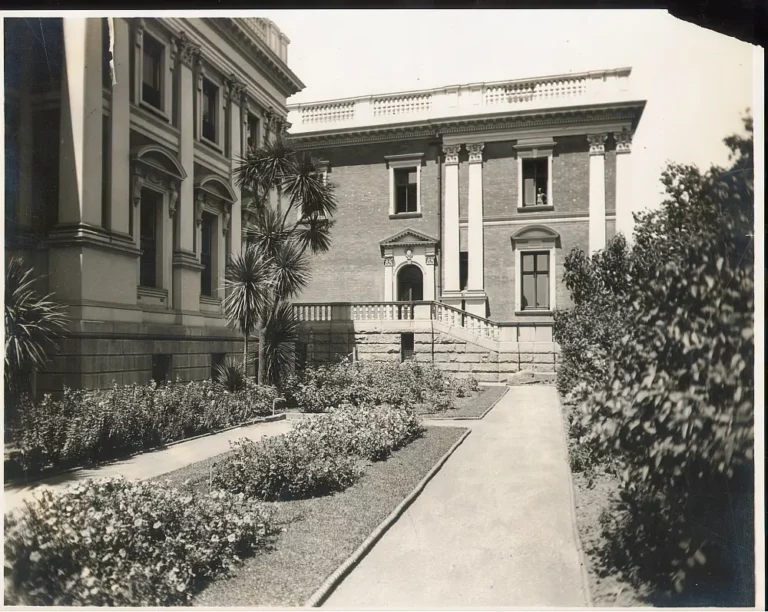
The Houses of Parliament– Image from the Cape Times
Early 20th century (1920s). Cape Town and picturesque peninsula.

The building that houses the NCOP is the oldest section of the buildings in the parliamentary precinct. This building dates to 1875 and was built under the guidance of the original designer, Charles Freeman, an architect of the Department of Public Works at the time. However, the construction took over 10 years to complete between 1875 and 1885 and cost £220 000 – more than five times the initial budget of £40 000. The building project was reallocated to the Scottish architect, Henry Greaves, following various financial and building problems which resulted in the exorbitant cost escalation.

From 1885 to 1910, the building housed the two Houses of the Cape Parliament – the Cape Legislative Council (the Upper House in terms of the Westminster Parliamentary system) and the Cape Legislative Assembly or Lower House.

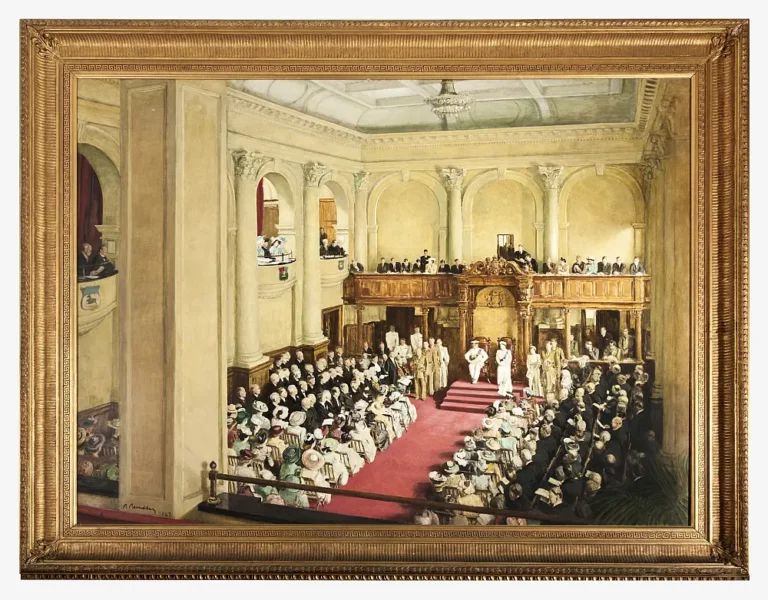
Union houses of Parliament in 1911, Image from Cape Times

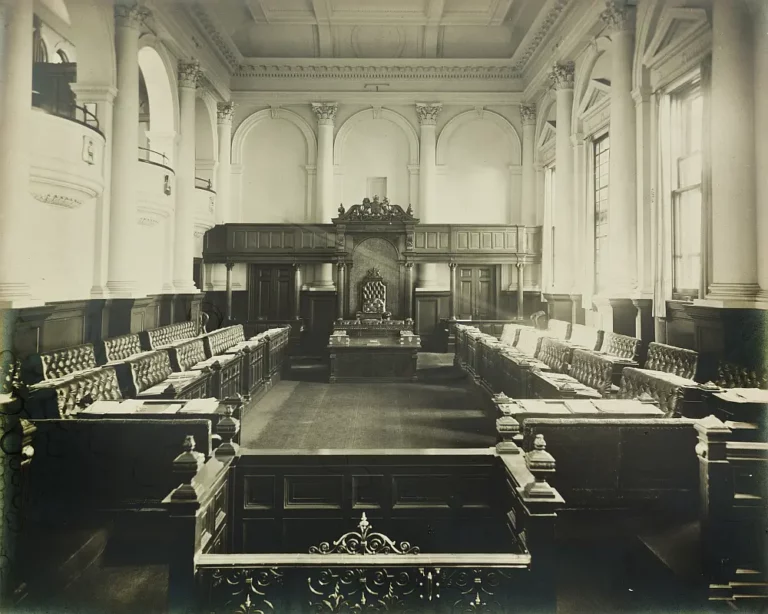
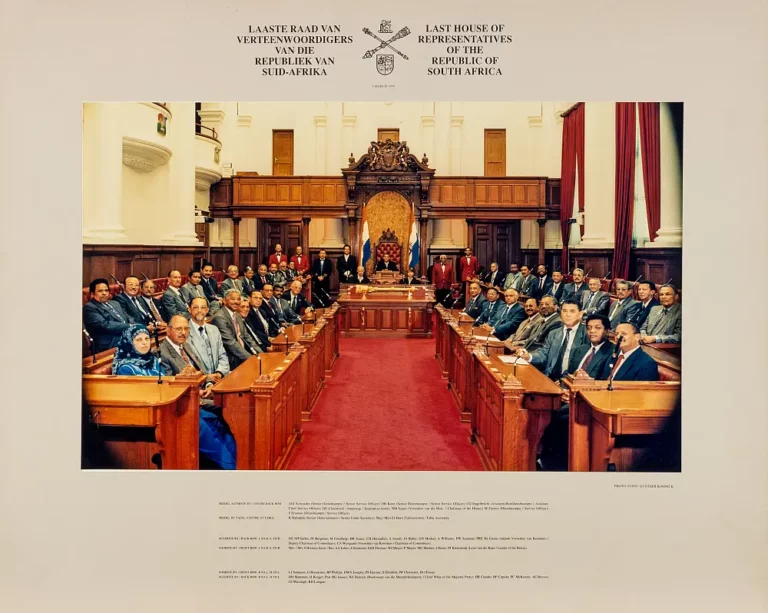
With the establishment of the Union of South Africa in 1910, the Cape Parliament ceased to exist and the chamber of the old Cape Legislative Assembly became the Senate – first of the Union of South Africa from 1910 to 1961 and then of the Republic of South Africa until 1980, when the Senate was abolished. From 1983 to 1994, the chamber hosted plenary sittings of the House of Representatives, comprising “Coloured” members who were part of the Tricameral Parliament established in terms of the Constitution of 1983.

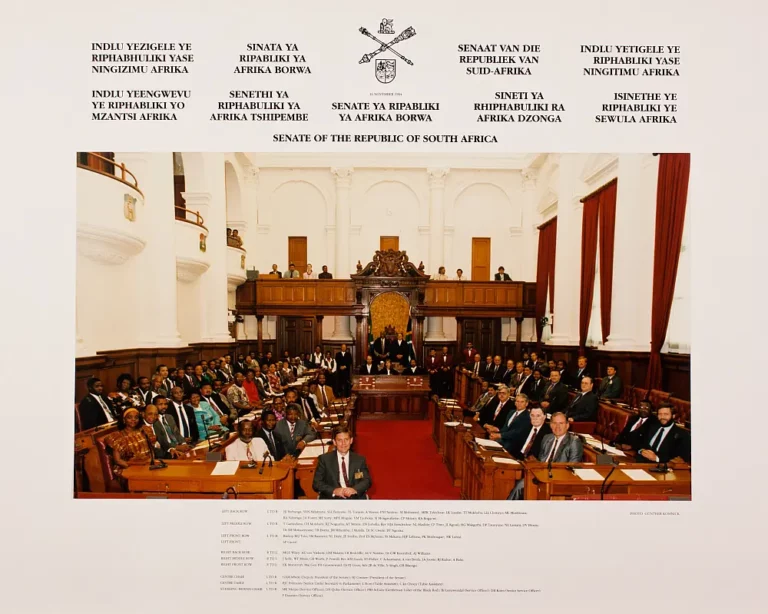
In 1994, the Senate was re-established as one of the two Houses of the first democratic Parliament of South Africa before the NCOP replaced it in 1997, following the adoption of the new democratic Constitution in 1996.

The chamber underwent extensive renovations in 2001, changing the seating from a rectangular to a semi-circular layout. However, it has retained its original deep red colour from the days when it was the Upper House of the Cape Parliament since it was modelled on the Upper House of Westminster Parliament.

The NCOP building houses the offices of the NCOP Presiding Officers – the Chairperson, the Deputy Chairperson, the NCOP Chief Whip, and the House Chairpersons. The Secretary to the NCOP and most support staff also have offices there.

The NCOP building, which has played a significant role in the constitutional history of SA, recently underwent renovations by New Urban Architects with the main architect being Reiner Visser.

Image by Revel Fox and Associates

Black and white print glued onto larger cardboard backing of an architectural sketch showing the addition of Poorthuis to the Old Assembly building. Bottom left corner are the details of the proposed additions. The title is: "Kaapstad Parlementshuis Veranderings.

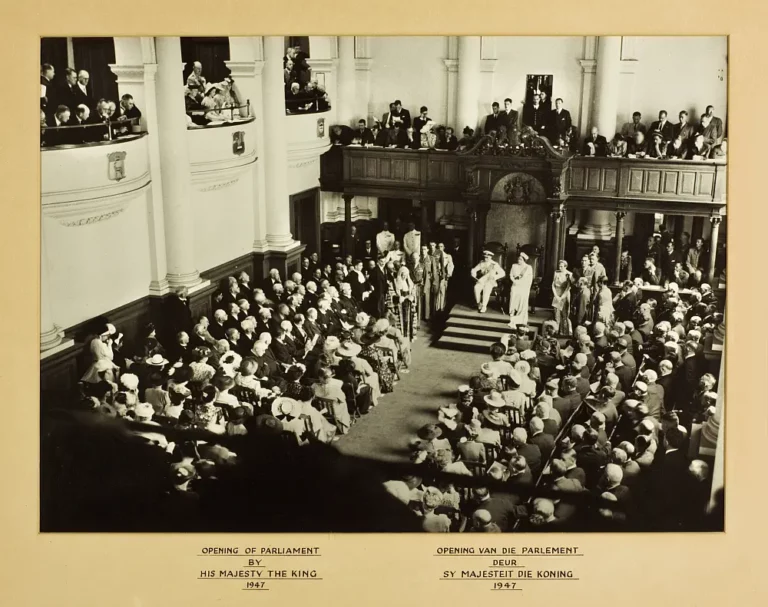
The Old Assembly Building, one of the two buildings damaged in the blaze, was added to the original 1885 building when a new Chamber was built for the Union Parliament with the unification of South Africa in 1910. Until 1961, when South Africa became a republic, the Chamber served as the House of Assembly of the Republic of South Africa until 1994.

Since 1994, committees of Parliament held meetings there and ANC MPs had their caucus in the Chamber, as well as various other public events like the annual sitting of the national House of Traditional Leaders and the annual Women’s and Youth Parliament, among others.

Other parts of the building served as offices of the Chief Whip of the Majority Party in the National Assembly and the offices of the Secretary to Parliament were also located behind the Old Assembly Chamber. The building also hosted the Parliament Post Office, one of the control rooms for Parliament Protection Services and the Keys Office.

After the unification in 1910, the second chamber of the old Cape Parliament was turned into a stately dining room for MPs and dignitaries – the Old Assembly dining hall was not affected by the fire and still serves the same purpose.

It was in this Old Assembly dining hall, when it was still a chamber, that the former British Prime Minister Harold MacMillan made his famous colonies independent speech on 03 February 1960 saying: “The Wind of Change is blowing through this continent. Whether we like it or not, this growth of national consciousness is a political fact.” The speech outlined a clear roadmap for British withdrawal from the African continent as a colonial power.

The National Assembly Building, another building destroyed by the 2022 fire, was built in 1983 to accommodate the expanded needs of the Tricameral Parliament and was added to the South side of the existing Old Assembly Building. The Tricameral Parliament was a three-tiered assembly comprising an all-white House of Assembly, a ‘coloured’ House of Representatives, and an Indian House of Delegates that presided over the last decade of Apartheid (from 1984 to 1994).

As an extension of the Old Assembly Building, the new building followed the same neo-classical architectural style of the adjacent Old Assembly Building. The leads on the project were the architects Jack van der Lecq and Hannes Meiring.

The main feature of the building was the new chamber built for the Joint meetings of the three Houses of the Tricameral Parliament. Before the fire, the chamber was used for the plenary sittings of the National Assembly and was also used for joint sittings of the two Houses, for example, the President’s State of the Nation Address and for addresses by international Heads of State.

Above the main chamber was a smaller chamber built to house the plenary sittings of the House of Delegates in terms of the 1983 Constitution. This House was established for representatives of the Indian population group. The chamber, which later became known as Committee Room E249 in the democratic dispensation, was completed in 1987 and used for meetings of the National Assembly Programming Committee and other committee meetings.

Before the fire, the building also accommodated the offices of the National Assembly Presiding Officers (the Speaker, the Deputy Speaker and the House Chairpersons), the offices of the Secretary to the National Assembly, the offices of some African National Congress MPs, and their support staff, as well as the offices of the Legislative Sector Support staff.

Businessperson and financier Sammy Marks, who bought the land in 1895, commissioned the famous Sir Herbert Baker and his business partner Francis Massey to design his Cape Town office block in 1902. Originally a narrow building of only three bays wide, the now seven-storey building was extended much later. From 1904 onward, the state rented the building and later sold it to the Department of Public Works for use by various state departments until they were moved to 120 Plein Street. Parliament started to use the building in 1976.

The building housed the debating chamber (commonly known as Committee Room M46) of the House of Delegates – the Indian MPs of the 1983 Tricameral Parliament – until their chamber in the New Wing (known as Committee Room E249) was completed in 1987.

Recently Parliament used Committee Room M46 during the ground-breaking processing of the former Public Protector’s fitness to hold office. Currently, the building houses MPs of the opposition parties, staff, and journalists of the South African Broadcasting Corporation.

Strategically positioned in the heart of the South African Parliamentary precinct, this former British High Commissioner’s Office is a reminder of colonial links with the British Crown. The architects John Perry & Lightfoot designed this sandstone building in 1937 and won an architectural award for it.

The building was sold to the then DPW in 2003 and renamed to Africa House. It currently houses the Joint Standing Committee of Intelligence (JSCI) and the Protocol Office of Parliament.

This building’s links with Parliament go back a long time as it was used for the sittings of the Cape House of Assembly from 1854 to 1884 before it served as the banqueting hall of the Good Hope Masonic Lodge until it was destroyed by a fire in 1892.

It was then rebuilt as a music hall and theatre in about 1900 and was known as the Good Hope Theatre.

The government purchased the building from the Freemasons in 1916 for staff offices for the Governor, who was seated in Tuynhuys. A new facade was built in 1925 in the Cape Revival style. It subsequently served as the State President’s Office and the seat of the President’s Council in the 1980s. Parliamentary members of the Inkatha Freedom Party occupied the building from 1994 to 2004. Since then, ANC MPs and the Presidency had used it.

Tuynhuys, which houses the Presidential offices, falls under the Presidency, and is managed independently and is closed to the public. It was used as an official residence by almost all the Governors of the Cape – Dutch, Batavian, and British and by State Presidents after the country became a Republic in 1961. It seems that it began as little more than a tool shed. This was converted into a guesthouse for important visitors to the Cape in the year Simon van der Stel became Governor in 1679 and by 1710, the guesthouse had already become a double-storey building with a flat roof.

However, there is evidence that Tuynhuys was not always livable. Lord Charles Somerset, who was responsible for adding a beautiful ballroom and for much of the re-decoration, had to move out of the building in 1824 as it was uninhabitable. Towards the end of the 19th century, authorities considered demolishing it. Historically, Tuynhuys (or Government House as it was called by the British) provided the grounds on which Parliament was built, with each extension creeping southwards into Tuynhuys gardens until in 1988, the buildings reached the Tuynhuys building itself. Tuynhuys still shares the same erf number as Parliament and together were declared national monuments in 1984. In 1971, the architect Gawie Fagan and his wife Gwen led the restoration of Tuynhuys. The centre of the building was restored to its original Baroque period, the wings were kept in the Victorian style and the Stalplein side reflects the Georgian period. The gardens were restored to a Baroque layout.

One of the most important turning points in South African history occurred at Tuynhuys when President FW de Klerk announced on 18 March 1992 from its steps, that the country had ‘closed the book on apartheid’.

The large open area between the main gates and the front of Tuynhuys is called Stalplein – a name derived from the governor’s horse stables. This area was originally the backyard of the Tuynhuys building, with the main entrance on the side of Government Avenue and the Company’s Gardens. This changed in 1913 when Government Avenue was closed to vehicular traffic, and it became the main entrance to Tuynhuys. Until 1978, when the government bought the land from the City Council, Stalplein was a public square and Parliament Street a traffic thoroughfare. The redevelopment of Stalplein took place under the direction of the then-Prime Minister P W Botha. The architects that worked on the project were originally Revel Fox and Partners, and later Munnik, Visser, Black and Fish. The area in front of Tuynhuys was redesigned and railed off, the statue of Louis Botha was moved to the Stalplein entrance gates, and a memorial garden with the grave of the Unknown Soldier and an Eternal Flame was created. It opened on 31 May 1986.