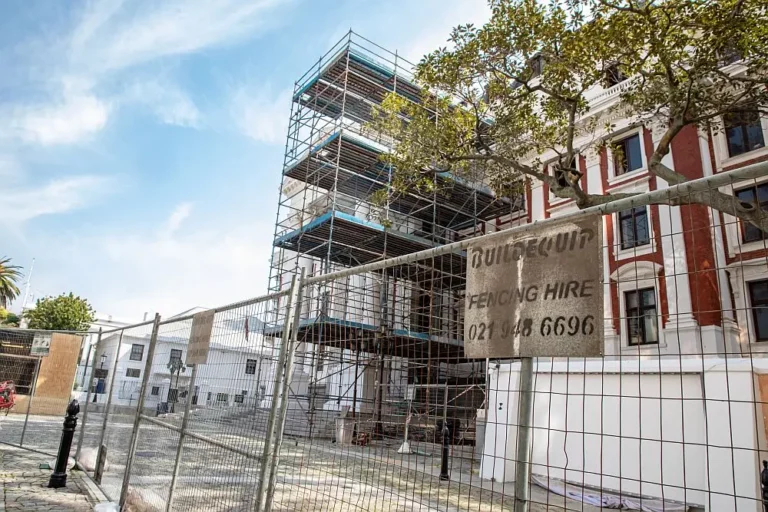
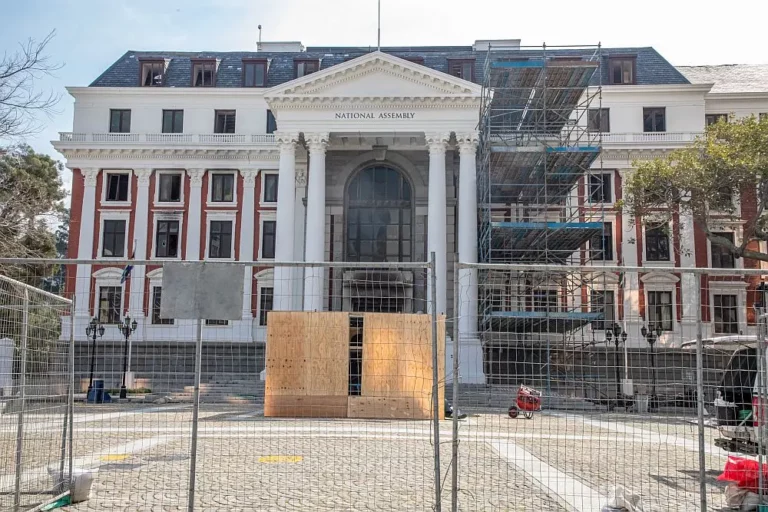
The fire that broke out on 2 January 2022 put Parliament on a new trajectory of rebuilding affected buildings in the parliamentary precinct and to restore the look and feel of the precinct in line with our democratic and cultural values. The fire raged for almost three days and destroyed the National Assembly and parts of the Old Assembly wing, including hundreds of offices used by Members of Parliament and their staff, as well as committee rooms where parliamentary oversight meetings took place. Millions of rands worth of office furniture, documents and other items, including broadcasting infrastructure were also destroyed.
Following the fire, Parliament immediately put in place various processes. These included assessing the damage caused using agencies appointed by the Department of Public Works and Infrastructure (DPWI). In addition, Parliament engaged in a series of talks and negotiations with all stakeholders in the restoration project, chiefly the National Treasury which led to the announcement in the 2022/2023 Medium-Term Budget Policy Statement that R2 billion had been allocated for the rebuilding of the gutted buildings. An additional R118 million was allocated for unforeseen and unavoidable expenditure arising from the fire.
Parliament and the Development Bank of South Africa, through its Infrastructure Delivery Division, have agreed to collaborate with other stakeholders such as the DPWI and the Treasury, to implement the project.
The DBSA is the most suitable entity to play this role given its expertise and experience in providing infrastructure development management services to other organs of state. These services include design, construction, upgrades, refurbishment and total facilities management. In addition, its regulatory regime is largely compatible with that of Parliament and is, furthermore, accountable to Parliament. This enables Parliament to oversee and hold it accountable for the project on an ongoing basis.
The people of South Africa have a vested interest in the restoration project and it is imperative that it be properly managed to limit the risks associated with projects of this nature and magnitude. Furthermore, the restoration project provides a unique opportunity to ensure that spaces are designed in a manner that best suits the specific needs of a democratic Parliament and to modernise the institution’s digital infrastructure. Here, on this webpage stakeholders and members of the public can follow developments and get updates relating to the building project because, ultimately, this is the people’s project.
The project is set to be completed within 24 months, while a further six months have been allocated for retention to deal with any snags and challenges arising after occupation.
It is envisaged that, upon the completion of this project, South Africa will have a new Chamber that fully serves the imperatives of our constitutional democracy. These include sufficient capacity for joint sittings of the two Houses and a larger public gallery to accommodate members of the public in line with Parliament's constitutional obligations of public involvement, as well as more office spaces for MPs and committee rooms.