

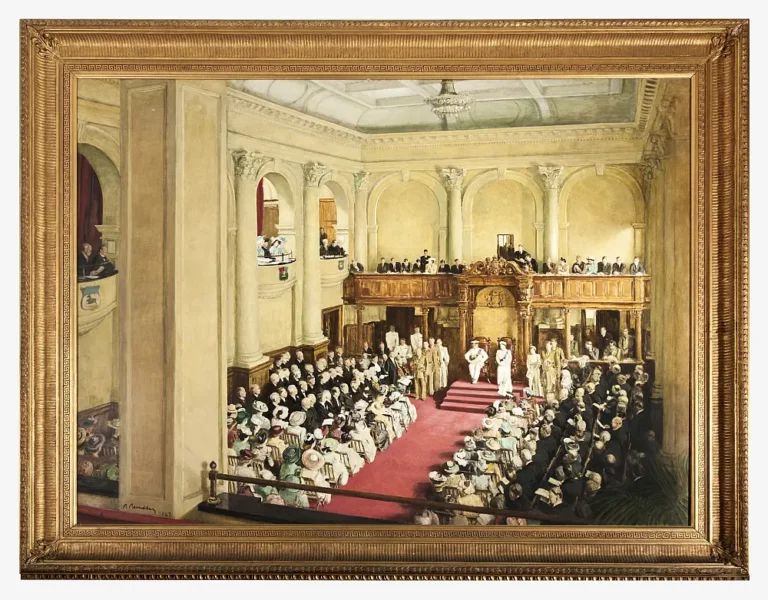
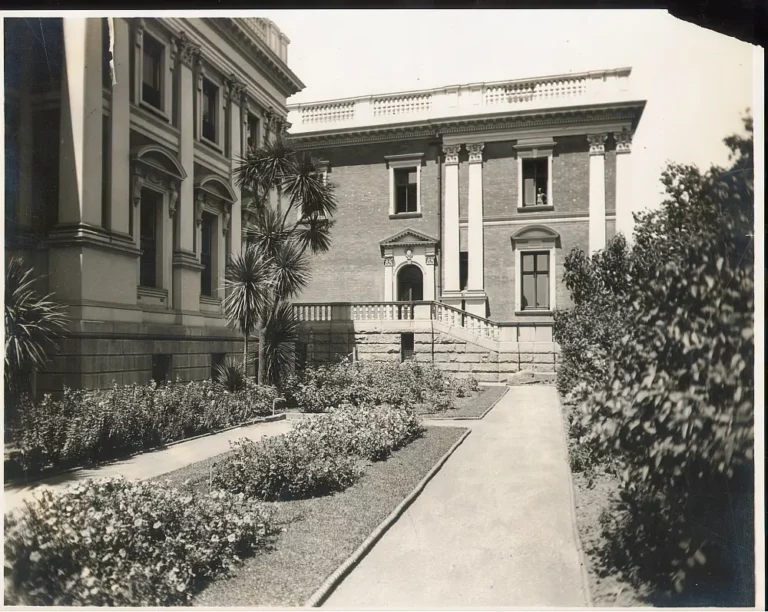
The fire that gutted the Parliamentary buildings on 2 January 2022 did not only destroy the brick and cement structures in the precinct but also the recently upgraded broadcast technology and the artworks displaying our Indigenous knowledge systems and traditional arts.
The destroyed artworks and the building structures trace a considerable chunk of our historical footprint, displaying who we were and are as a nation.
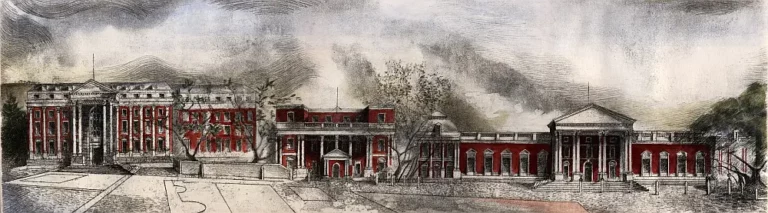
Image by Lyn Smuts The Houses of Parliament. Artist's proof hand-coloured etching of the Houses of Parliament viewed from Parliament Street, showing the 1885 (NCOP), 1910 (Old Assembly) and 1985 (National Assembly) buildings. Faint outline of Table Mountain behind. Artistic license with perspective.
According to the South African Heritage Resources Centre (SAHRC), the idea of a South African parliamentary precinct started in 1872 when it was decided to create a single Parliamentary Building to locate both Houses of Parliament in one building.
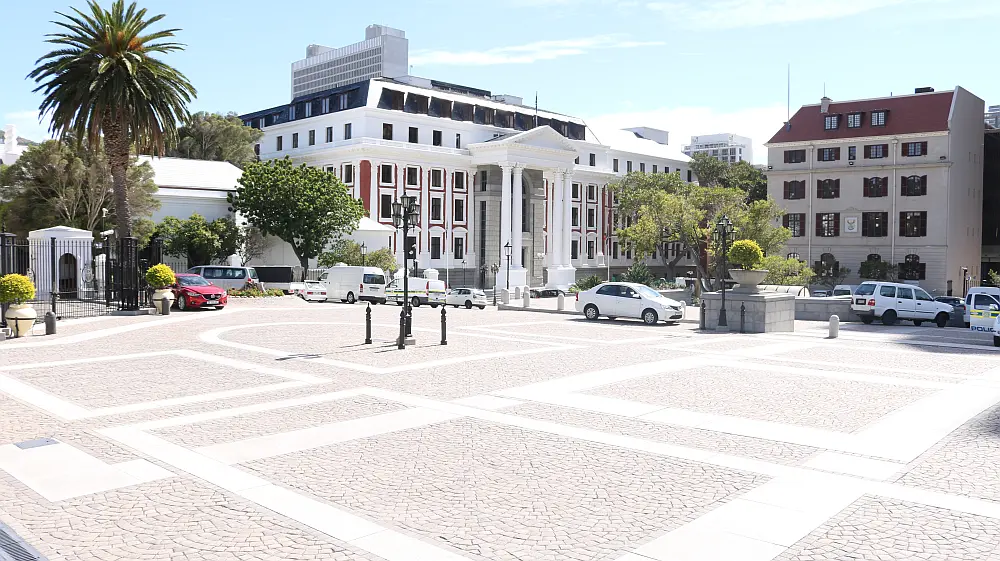
The Parliament of the Republic of South Africa and the Parliamentary Precinct, which includes Erf 95165; Erf 95164; Stal Plein Erf 3741; Erf 9557; Erf 3789; Erf 3790; Erf 3794, and Erf 3798 have been identified as a heritage resource with qualities so exceptional that it is of special national significance. Section 3(3) of the National Heritage Resources Act, 1999 (Act 25 of 1999) outlines criteria for determining the significance of a site or object to be included as part of the national estate. These include historical value, aesthetic value, scientific value, social value and rarity.
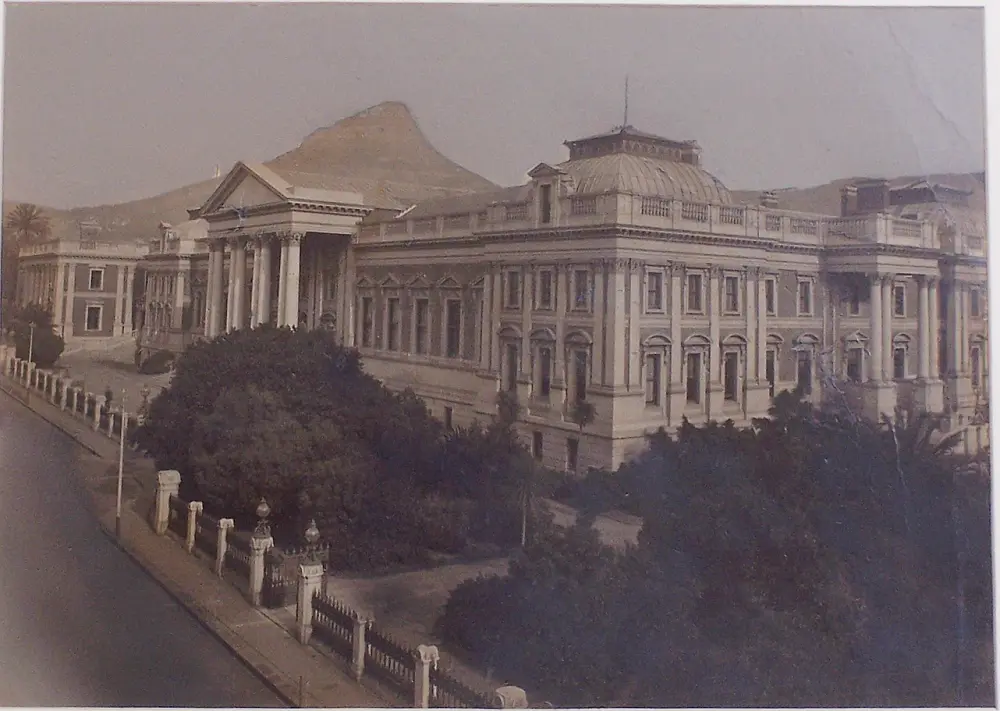
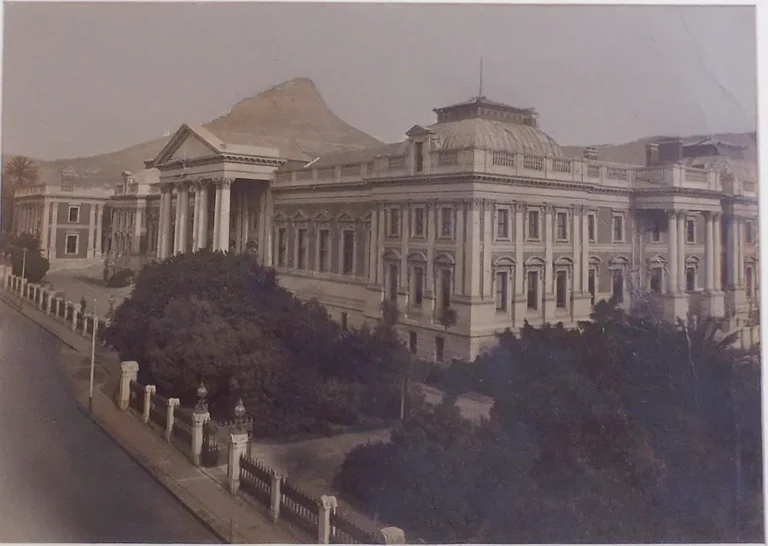
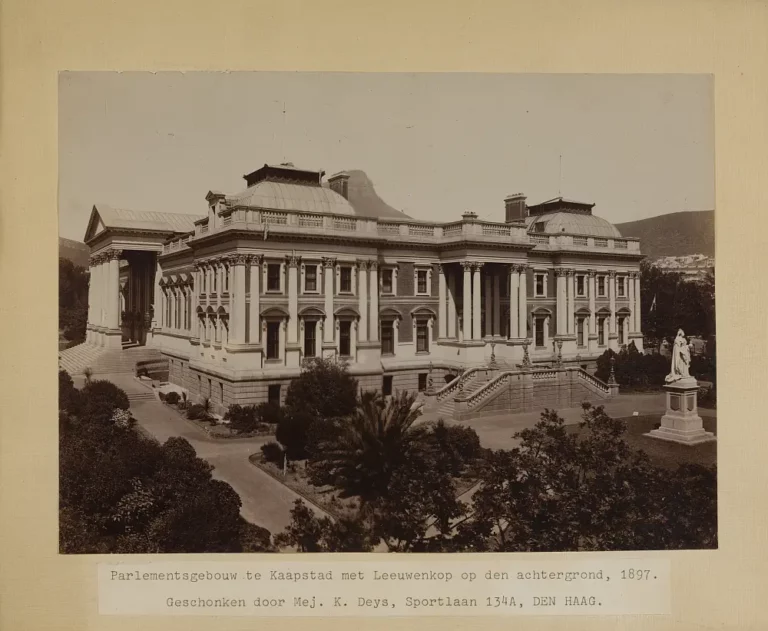
Image by Taylors Studios Ltd, Cape Town Black and white photograph of exterior of the Houses of Parliament, Cape Town. Shows original building (1885) and Old Assembly building (1910), with Lion's Head in background.
The buildings in the precinct of Parliament house the Members of Parliament (MPs) – as the key people in the institution – and cater for a range of administrative staff who support MPs as they execute their work. Parliament comprises about 1 500 administrative staff to provide various support services to MPs. This includes legal services, research, secretarial, communications, security, organising, logistical, catering, messengers, and cleaning services, among others.
The parliamentary precinct has several building, which include the National Council of Provinces (NCOP) Building, the National Assembly Wing, the Old Assembly Building, the Good Hope Building, the Marks Building, Africa House, Tuynhuys, 90 Plein Building, 100 Plein Building, and the 120 Plein Building that also houses the entrance of the visitor’s centre.

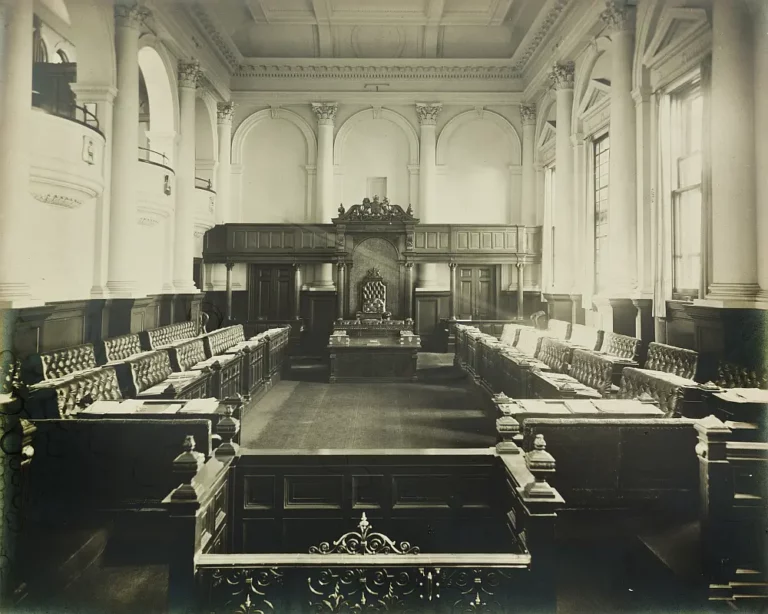
The Houses of Parliament– Image from the Cape Times
Early 20th century (1920s). Cape Town and picturesque peninsula.


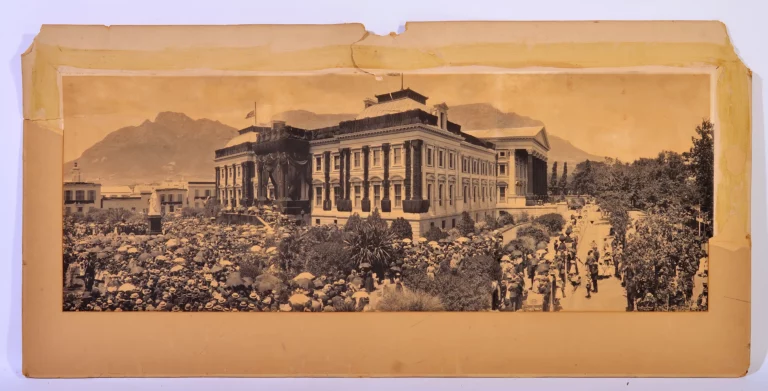
Union houses of Parliament in 1911, Image from Cape Times

Image by Revel Fox and Associates
Black and white print glued onto larger cardboard backing of an architectural sketch showing the addition of Poorthuis to the Old Assembly building. Bottom left corner are the details of the proposed additions. The title is: "Kaapstad Parlementshuis Veranderings.